Case and Materials

A City That Cares: Cross-Agency Innovation to Support Caregivers in Bogotá

  • Authors Gaylen W. Moore, Yamile Nesrala, Hannah Riley Bowles, Jorrit de Jong, Santiago Pulido-Gómez
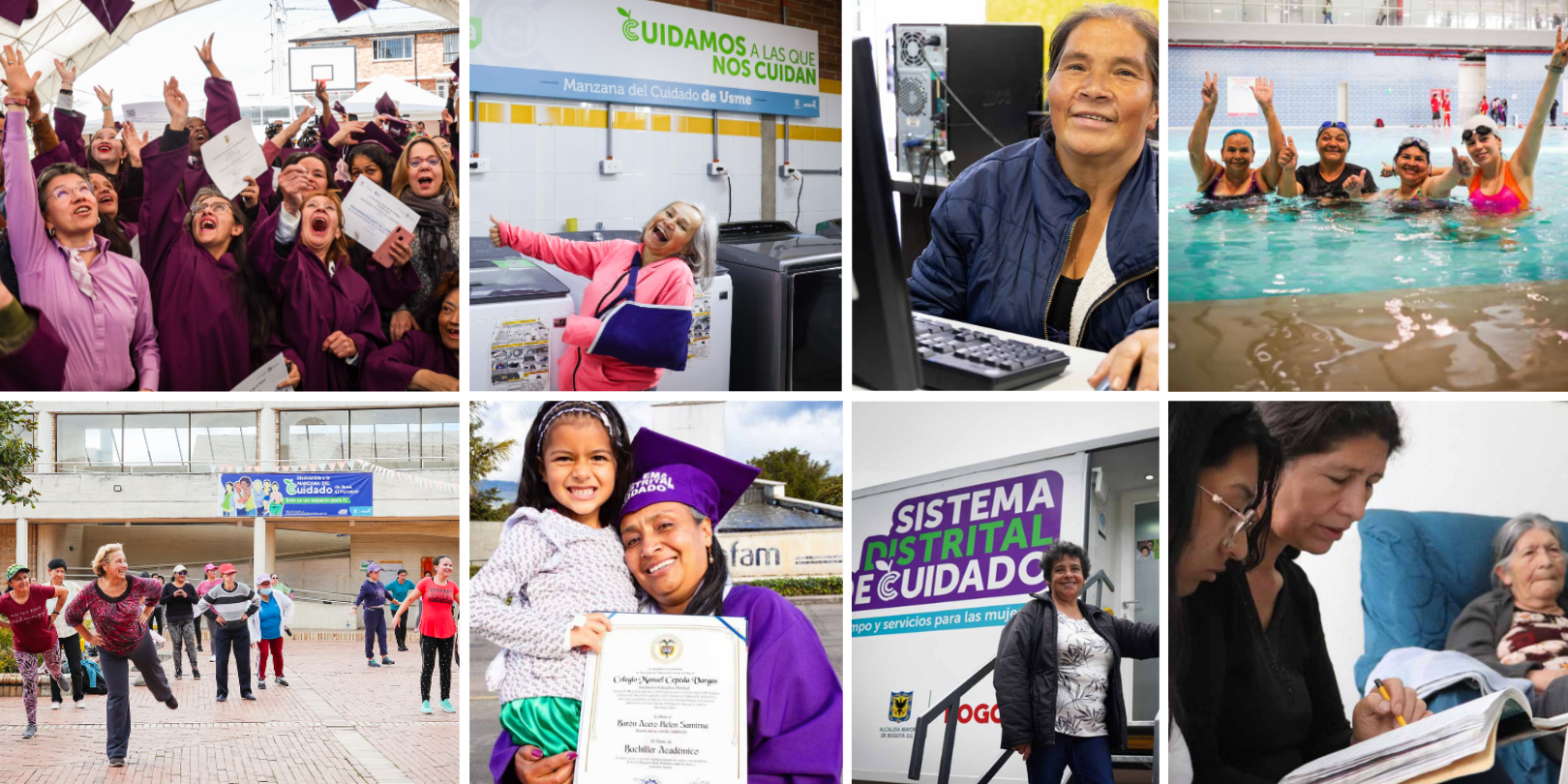
Collage of images with people in them

Last Updated

Topics
Collaboration, Innovation, Strategic Leadership and Management

Location
South America

Overview

How can city leaders recognize, reduce, and redistribute unpaid care work while driving lasting cultural change? This case explores Bogotá Mayor Claudia López’s effort to deliver on a campaign promise to build a city-wide “system of care” through the creation of “Manzanas del Cuidado” (Care Blocks), in partnership with Secretary of Women’s Affairs Diana Rodríguez. Designed to explore leading innovation in government and building cross-boundary collaboration, this case helps leaders understand how to test and develop interventions, identify success metrics, and develop tactics for creating enduring change.



More resources

Supporting Materials

Introduction

The case follows Bogotá’s Mayor Claudia López and Secretary of Women’s Affairs Diana Rodríguez as they imagine and build “Manzanas del Cuidado,” or “Care Blocks,” to enrich the lives of caregivers (mainly women) whose valuable work is unpaid and often unrecognized. During her campaign, López promised feminist leaders that she would establish a “system of care” to recognize the importance and address the inequitable distribution of unpaid care work.

The case discusses the economic and social challenges the initiative set out to address, López’s selection and positioning of Rodríguez to lead the charge, how López and Rodríguez came up with the Care Blocks as an innovative approach to deliver on the campaign promise, and the COVID-19 pandemic’s impact on the problem and the city’s ability to address it. The case also explores how López and Rodríguez navigated relationships with key government agencies to make the Care Blocks a reality, and how they revised and renegotiated their theory of change (or “public value proposition”) along the way in pursuit of meaningful cultural change.

By the end of summer 2022—about two thirds of the way through López’s term—Bogotá had opened ten Care Blocks, provided over 160,000 services, trained nearly 7,000 people in cultural change workshops, and set the stage for the care system’s continued growth. But questions remained. Were care responsibilities shifting within families? Were the Blocks measurably improving health and economic opportunities for caregivers? Was the initiative changing community attitudes and behaviors? What more could López and Rodríguez do to deliver on their promise of recognizing and redistributing care work? What would it take to galvanize enduring cultural change?

Guides for using this case are forthcoming. 


Learning Objectives

This case study was designed to generate discussion about leading change initiatives that require innovation and cross-boundary collaboration. A case session should support participants to:

  • Examine the challenges, strategies, and tactics involved in leading change in government.
  • Understand how to develop and test interventions in order to deliver results for communities.
  • Figure out how to articulate performance metrics to measure success.
  • Understand leadership as negotiation and mediation in cross-silo collaborations.

Stay up to date on our latest work to improve cities

Follow us

The Bloomberg Harvard City Leadership Initiative is located at the Bloomberg Center for Cities at Harvard University.